4-Axis vs. 6-Axis Robots for Press Brake Tending: How to Choose the Right Automation

4-Axis vs. 6-Axis Robots for Press Brake Tending: How to Choose the Right Automation
For many sheet metal fabricators, the question is no longer whether to automate press brake tending, but which robot to put on the job. The two most common options are a 4-axis robot, typically a dedicated press brake tending unit, and a general-purpose 6-axis articulated robot.
Both can remove an operator from a repetitive, potentially dangerous task. But they are not interchangeable. The right choice depends on your parts, your dies, and how much flexibility you need from the cell. This guide compares the two architectures and uses the BRTIRPZ1508A (4-axis) and BRTIRUS1820A (6-axis) as concrete benchmarks to help you decide.
The Problem: Manual Press Brake Tending Is a Bottleneck
If you run a press brake today, you know the pain points. A skilled operator is required for every bend, and the job is physically demanding. The operator loads a blank, positions it against the back gauge, steps on the pedal, waits for the bend, and removes the finished part. They do this hundreds or thousands of times per shift.
This creates several problems:
- Quality depends on the operator. Fatigue, distraction, or rushing leads to inconsistent bend angles and scrapped parts.
- Throughput is capped by human speed. A manual operation is limited to how fast one person can safely work.
- Skilled labor is hard to find and retain. Fewer people want repetitive, physically taxing machine-tending jobs.
- Safety is a constant concern. Hands near the die area present a risk, even with light curtains and two-hand controls.
Why Automate: Consistency, Repeatability, and Flexibility
The value of automating press brake tending goes beyond replacing a person. The goal is to make the process repeatable:
- Stable quality. A robot positions the blank the same way every cycle. Bend angles become consistent across a batch.
- Predictable throughput. A robot does not slow down at the end of a shift. Cycle times are repeatable and can be calculated.
- Long-term cost reduction. While the upfront investment is real, the payback comes from reduced scrap, higher output per hour, and the ability to redeploy skilled operators to higher-value tasks.
- Production flexibility. A robot cell can be reprogrammed for different part geometries, allowing you to run smaller batches economically.
The key is choosing a robot with the right capabilities for your parts—not just the cheapest option.
Solution Logic: Matching Robot Architecture to the Application
At YGT Robot, we approach this as an integration problem. We start with the part and the press brake, then select the robot that fits the workflow. The two architectures we compare here serve different purposes.
4-Axis Robot: A Dedicated Tool for Press Brake Tending
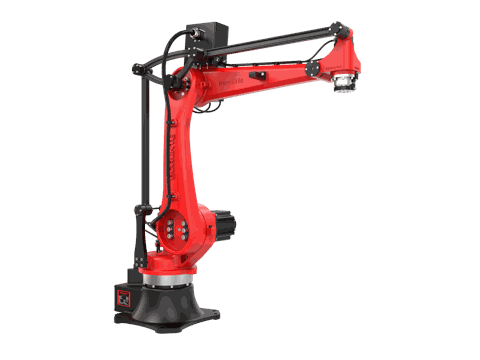
A 4-axis robot like the BRTIRPZ1508A is purpose-built for a specific tending pattern. Its design typically prioritizes speed and simplicity for a defined cycle: pick a blank, present it to the die, wait for the bend, and place the part. Because it has fewer axes, its control is simpler, and its motion is often faster within its optimized envelope.
This makes a 4-axis robot an excellent choice when:
- Parts are relatively simple and do not require complex flips or rotations between bends.
- The workflow is predictable, with a consistent pick-up point and placement point.
- The priority is maximum throughput on a high-volume, low-mix production run.
6-Axis Robot: Flexible Articulation for Complex Workflows
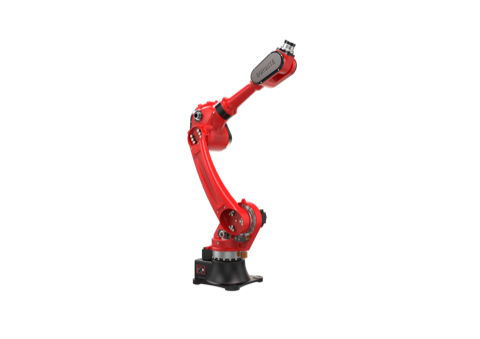
A 6-axis articulated robot like the BRTIRUS1820A offers a much larger work envelope and the ability to orient the end-effector in almost any direction. This is critical for parts that need to be flipped between bends, or when the robot must reach around obstacles or service multiple machines.
A 6-axis robot becomes the better choice when:
- Parts are complex and must be flipped or rotated between bends to achieve the required geometry.
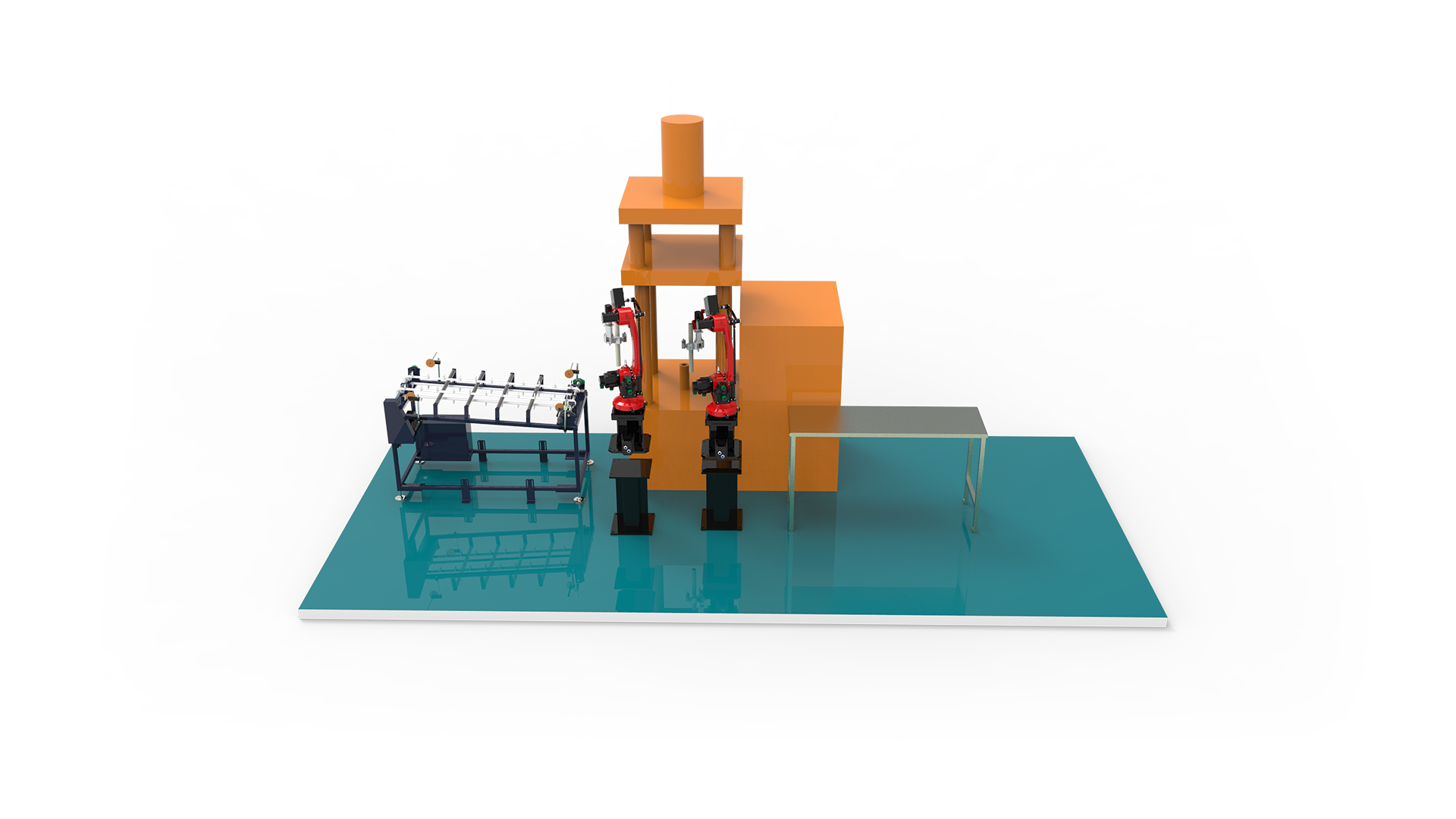
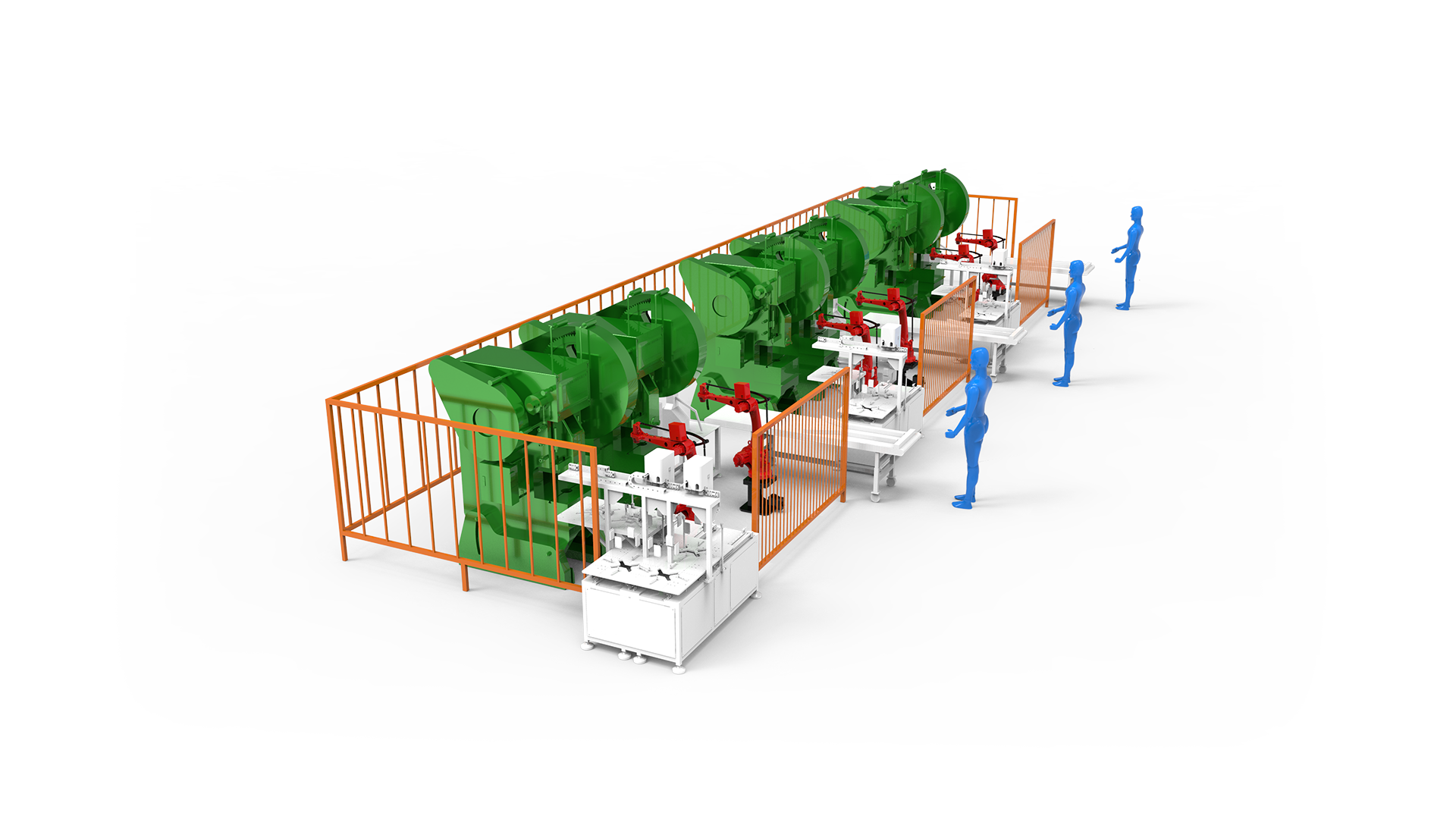
- The cell includes multiple machines, such as a press brake and a punching or stamping press, and one robot is expected to service both.
- Future flexibility matters. A 6-axis robot can be redeployed to a different task, such as machine tending or material handling, if production needs change.
Key Selection Factors: A Side-by-Side Benchmark
To make this concrete, here is a direct comparison of a representative 4-axis and 6-axis robot from our lineup.
| Selection Factor | BRTIRPZ1508A (4-Axis) | BRTIRUS1820A (6-Axis) | Why It Matters |
|---|---|---|---|
| Axis Configuration | 4-axis | 6-axis | 4-axis is optimized for simple, high-speed tending; 6-axis offers full orientation control for complex parts. |
| Payload | 8 kg | 20 kg | Heavier payloads allow handling larger blanks or dual-sheet grippers. |
| Arm Reach | 1413 mm | 1895 mm | A longer reach can service a larger press brake or reach into a deeper machine throat. |
| Repeatability | ±0.05 mm | ±0.05 mm | Both offer the precision needed for consistent part placement in the die. |
| Power Capacity | 3.18 kVA | 5.87 kVA | Higher power draw for a larger robot; check your facility's available supply. |
| Robot Weight | Approx. 150 kg | Approx. 230 kg | Heavier robots may require a more robust mounting base. |
| CE Certification | Yes | Yes | Confirms compliance with EU safety and EMC directives for integration in regulated markets. |
| Explosion-Proof Rating | No | No | If your environment has explosive dust or vapors, neither model is suitable; consult us for alternatives. |
Reading the Benchmark Table
The table is not a verdict on which robot is "better." It is a tool to help you map your requirements. For example:
- If you bend small, light parts (under 8 kg) with simple geometries, the BRTIRPZ1508A offers a cost-effective, high-speed tending solution.
- If you handle larger blanks, need to flip parts between bends, or want the flexibility to service multiple machines, the BRTIRUS1820A with its 20 kg payload and 1895 mm reach is the more appropriate starting point.
Both robots share the same ±0.05 mm repeatability, meaning both are capable of precise, consistent placement. The decision is about reach, payload, and the dexterity required by your part geometry.
YGT Experience: Integration Is the Difference
At YGT Robot, we do not just supply robots—we design and deliver the complete automation cell. Our role is to integrate the robot with your press brake, tooling, and control system to achieve a reliable production process.
When we work with a client on a press brake tending project, our engineers consider the full picture:
- Part geometry and bend sequence: We analyze the part to determine if a simple 4-axis cycle is sufficient or if the 6-axis articulation is required for flips and rotations.
- Press brake interface: We handle the communication between the robot and the press brake's controller to coordinate the bend cycle safely.
- End-of-arm tooling: We design custom grippers that hold the blank securely without marking the material.
- Safety system: We implement perimeter guarding, light curtains, and interlocked access to ensure a safe working environment.
This integration experience is what turns a robot and a press brake into a productive manufacturing cell. A robot is only as good as its end-of-arm tooling, programming, and safety integration.
FAQ
Can a 4-axis robot handle parts that need to be flipped between bends?
Generally, no. A 4-axis robot has a limited range of motion and is typically not capable of the complex wrist articulation required to flip a part in mid-air. For parts that must be flipped or rotated, a 6-axis robot like the BRTIRUS1820A is usually required.
Is a 6-axis robot always slower than a 4-axis robot for press brake tending?
Not necessarily. A 4-axis robot is often faster within its optimized, simple cycle because it has less mass to move and a simpler control path. However, if a 4-axis robot cannot perform the required motions, it is not a viable option, making the comparison moot. For complex cycles, a 6-axis robot's flexibility is more important than raw speed.
What is the most important factor when choosing between a 4-axis and 6-axis robot?
The most important factor is your part geometry and bend sequence. If your parts require complex orientation changes, you need a 6-axis robot. If your parts are simple and your priority is maximum speed on a repetitive task, a 4-axis robot may be the most efficient solution. Reach and payload are secondary considerations once the required motions are defined.
Can the BRTIRUS1820A service both a press brake and a stamping press in one cell?
Yes. With its 20 kg payload and 1895 mm reach, the BRTIRUS1820A has the capacity and flexibility to be programmed to handle material flow between two machines. This is a common integration pattern where a single robot manages loading and unloading for multiple processes. The feasibility depends on the physical layout of the machines and the required cycle times.
How do I know if my part requires a 6-axis robot instead of a 4-axis robot?
A good rule of thumb is to analyze the part's bend sequence. If the part must be turned over, rotated around a vertical axis, or if the robot must approach the die from an angle other than straight on, you will likely need the extra axes. For simple, flat blanks that are bent in a single plane without being flipped, a 4-axis robot is often sufficient. Our engineers can review your part drawings and recommend the appropriate solution.
Making the Decision
Choosing between a 4-axis and a 6-axis robot is not a matter of one being universally superior. It is about matching the machine's capabilities to the demands of your parts and your production goals.
- Choose a 4-axis robot (e.g., BRTIRPZ1508A) if: You have high-volume, low-mix parts with simple geometries that do not require flipping. You want a fast, dedicated tending solution.
- Choose a 6-axis robot (e.g., BRTIRUS1820A) if: You have parts that require flipping or complex orientation, you need to service multiple machines, or you want a more versatile platform that can be redeployed for other tasks in the future.
A well-integrated robot cell will deliver consistent quality and predictable throughput. The right starting point is a clear understanding of your part requirements.
If you are evaluating a specific part family or a new press brake cell, our team can help you analyze the application and select the appropriate robot. We can also advise on end-of-arm tooling and safety integration to ensure your automation project is successful from the start.