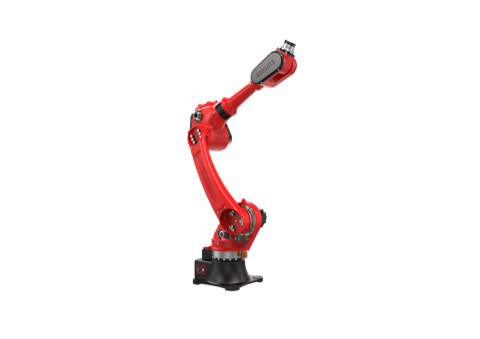
BRTIRUS1820A Sourcing Guide for Heavy-Part Handling Cells: Wheel Loading, Die Casting Extraction, and Bar Feeding

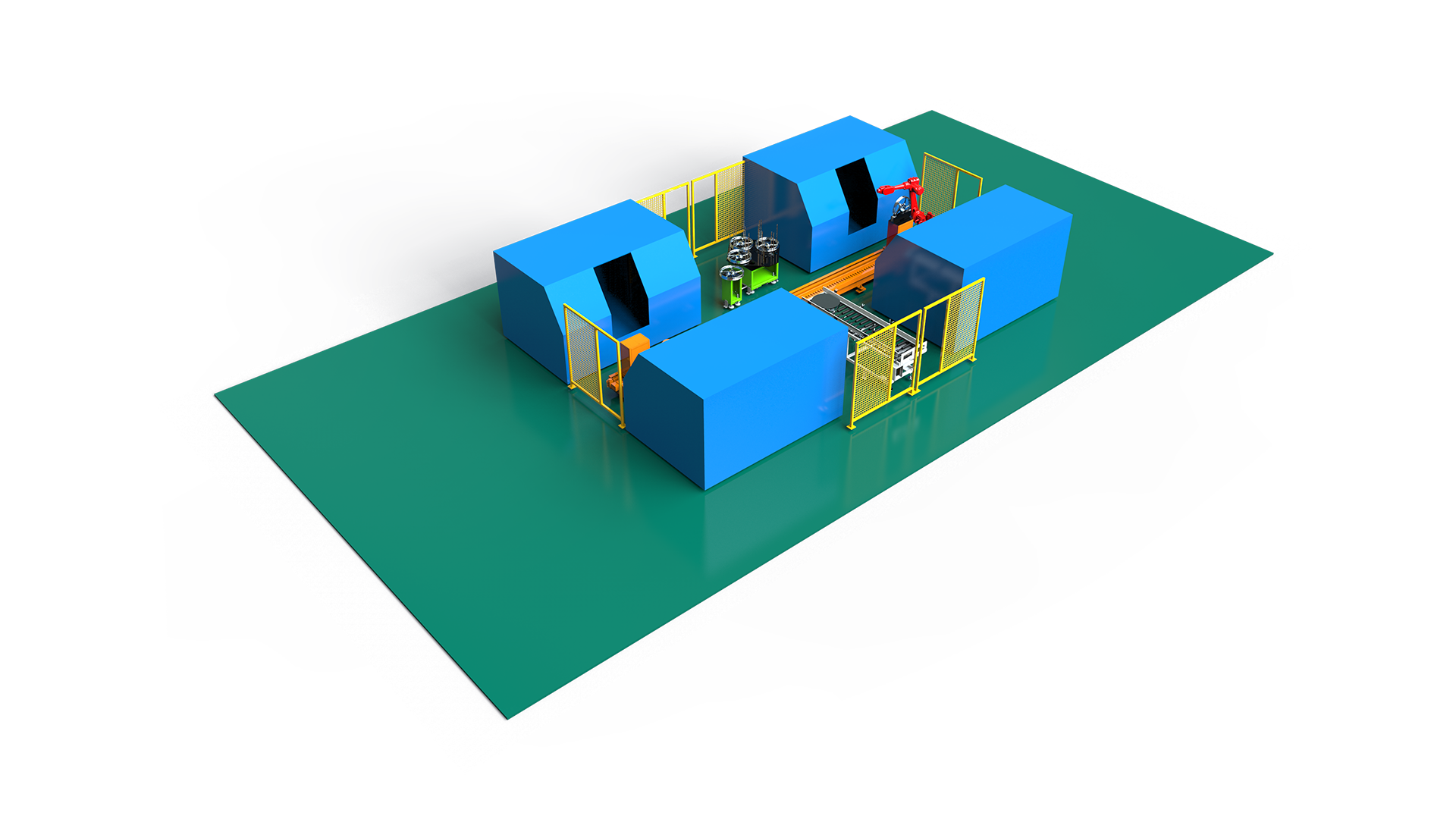
Why heavy-part transfer is the next bottleneck
In wheel machining, die casting, and bar feeding, the workpiece is often heavier than the operator wants to move repeatedly, and the cycle is more repetitive than the process itself requires. Manual transfer between stations introduces three problems that show up in the data long before they show up on a customer complaint form: cycle time drift across shifts, inconsistent part orientation at the next station, and a rising risk of handling damage on machined or cast surfaces.
Automation of the transfer step does not replace the machining or casting process. It stabilizes the interface between processes. That is usually where the largest and cheapest gains sit.
What a heavy-part handling cell actually has to do
Before comparing robot models, it helps to separate the cell into four functional layers. Each layer has its own selection criteria, and confusing them is the most common reason a cell underperforms after commissioning.
| Layer | Function | Typical failure mode if under-specified |
|---|---|---|
| Robot | Move the part between defined points | Reach shortfall, payload margin consumed by gripper, cycle time miss |
| End effector | Hold the part securely | Vacuum loss, slip on oily cast surfaces, double-sheet or double-part pickup |
| Cell layout | Define station positions and travel | Interference, wasted travel, unsafe access |
| Control interface | Synchronize with machine tools, die casting machine, or feeder | Timing mismatch, blocked signals, manual intervention |
A robot that meets its payload and reach specification can still fail the cell if the gripper or the layout is wrong. This is why selection should start from the part and the cell, not from the robot catalog.
One-to-four wheel loading: layout logic
Wheel loading cells typically serve one machine tool with multiple part positions, or several machines from a shared handling point. The "one-to-four" configuration means one robot serves four loading positions — usually four wheel positions on a machining fixture, or four stations around a single machine.
Key layout questions:
- Reach coverage. The robot must reach every station plus the pick and place positions without the arm entering the machine's working envelope at the wrong time. A reach of 1,895 mm (arm reach, per the BORUNTE selection manual) gives useful coverage for a compact four-station arrangement, but the actual usable radius depends on gripper length and part orientation.
- Payload margin. The BRTIRUS1820A is rated at 20 kg payload. The gripper, adapter plate, and any vacuum or hydraulic lines consume part of that. For a wheel of, say, 12–15 kg, the remaining margin for the end effector is tight but workable with a lightweight gripper design. Heavier wheels push the calculation toward a larger model.
- Cycle time. Four stations means four pick-and-place sequences per cycle. If the machine tool cycle is shorter than the robot's four-station cycle, the robot becomes the bottleneck. This is a layout problem, not a robot problem — solve it by reducing travel distance or by changing the station arrangement.
- Repeatability. The BRTIRUS1820A is specified at ±0.05 mm repeatability. For wheel loading into a machining fixture, this is generally adequate, but the fixture's locating method (chuck, collet, or pin) determines how much of that repeatability actually reaches the part.
Gantry-track one-to-two die casting extraction
Die casting extraction is a different problem from wheel loading. The robot is not simply moving a part from A to B — it is entering a mold during a narrow time window and must exit before the mold closes.
The relevant concepts in this process are the opening window, the ejection timing, and the mold safety window. A robot that arrives too early or leaves too late creates interference, and even intermittent interference can trigger mold protection and stop production.
A gantry-track configuration with one robot serving two die casting machines changes the timing problem. The robot must:
- Complete extraction from machine A within its window.
- Travel along the gantry to machine B.
- Arrive at machine B within its window — which may be offset from machine A's cycle.
The gantry track itself becomes a selection variable: travel speed, positioning repeatability along the track, and the control interface between the robot controller and the die casting machine's EuX/EuY signals all affect whether the two-machine configuration is stable or intermittent.
For a 20 kg payload robot, the practical part weight limit depends on the gripper and the extraction motion. A part that is within payload when held statically may exceed the dynamic limit during a fast extraction stroke. This is worth confirming with a cycle simulation rather than a catalog comparison.
Bar feeding tables: a different handling profile
Bar feeding is often treated as a simple pick-and-place task, but the part geometry changes the problem. Long bars have a high moment of inertia relative to their weight, and the gripper must control both position and orientation along the bar's length.
Selection considerations for bar feeding with a six-axis robot:
- Gripper type. A single-point gripper on a long bar creates a cantilever. Two-point or wide-jaw grippers distribute the load and reduce deflection.
- Reach and orientation. The robot must place the bar into the feeder at the correct angle, which may require wrist articulation rather than a simple top-down motion.
- Table interface. The feeding table's presentation method — magazine, chain, or gravity — determines whether the robot can pick consistently without a vision or sensor assist.
Key selection factors for the BRTIRUS1820A
The table below summarizes the confirmed specifications relevant to heavy-part handling applications.
| Factor | BRTIRUS1820A specification | What it means for the cell |
|---|---|---|
| Payload | 20 kg | Part + gripper + adapter must stay under this; leave margin for dynamic motion |
| Arm reach | 1,895 mm | Determines station coverage; reduce by gripper length and part offset |
| Repeatability | ±0.05 mm | Adequate for most loading fixtures; final accuracy depends on fixture design |
| Axes | 6 | Allows orientation control for bar feeding and die casting extraction |
| Weight | Approx. 230 kg | Affects mounting structure and gantry track load rating |
| Power capacity | 5.87 kVA | Relevant for cell power planning |
| Certification | CE (machinery and low voltage) | Supports compliance documentation for EU-bound projects |
| Explosion-proof | Not available on this model | If the cell requires explosion-proof, a different model is needed |
Integration is where the cell succeeds or fails
Selecting a robot is the starting point, not the solution. The cell works when the gripper, the layout, the machine interfaces, and the safety logic are designed around the specific process.
YGT Robot's role in these projects is integration and application engineering: understanding the part, the process window, and the machine signals, then selecting and configuring the robot platform, end effector, and control interface as one system. The robot platform itself is sourced from BORUNTE; the integration, layout, and application logic are where the engineering work sits.
For die casting extraction specifically, the critical integration work is the timing interface between the robot and the die casting machine — the opening window, ejection signals, and safety interlocks. For wheel loading, it is the fixture interface and the four-station cycle balance. For bar feeding, it is the gripper design and the feeder presentation method.
FAQ
Q: Can the BRTIRUS1820A handle a 15 kg wheel with a gripper? A: The robot is rated at 20 kg payload. A 15 kg wheel leaves 5 kg for the gripper and adapter, which is feasible with a lightweight design but should be confirmed against the actual gripper weight and the dynamic motion profile. Fast moves increase the effective load on the wrist.
Q: Is the BRTIRUS1820A suitable for die casting extraction? A: It is a six-axis robot with 20 kg payload and 1,895 mm reach, which fits many die casting extraction cells. The critical factor is not the robot alone but the timing interface with the die casting machine — the opening window and ejection signals must be coordinated. This is confirmed during cell design, not from the catalog.
Q: Does the BRTIRUS1820A support explosion-proof environments? A: No. Explosion-proof capability is not available on this model. If the application requires it, a different robot model is needed.
Q: What gripper type is recommended for wheel loading? A: It depends on the wheel geometry and surface condition. For machined wheels, a mechanical gripper with soft jaws is common; for cast surfaces with oil or release agent, vacuum may be unreliable. The gripper should be selected after the part and fixture are defined.
Q: Can one robot serve two die casting machines on a gantry track? A: Yes, this is a common configuration, but it requires the two machines' cycles to be compatible or the robot to have enough travel speed to meet both windows. The gantry track and control interface are part of the cell design.
Q: What is the repeatability of the BRTIRUS1820A? A: ±0.05 mm, per the manufacturer's specification. Actual part placement accuracy depends on the fixture and the gripper.
Q: Does YGT Robot manufacture the BRTIRUS1820A? A: No. YGT Robot integrates and applies the BORUNTE robot platform in automation cells. The robot platform is manufactured by BORUNTE; YGT Robot provides the integration, application engineering, and on-site service.
Related products
- BRTIRUS1820A Six-Axis Robot
Next step
If you are evaluating a heavy-part handling cell, the useful starting point is the part drawing, the machine interface, and the cycle time target. From those three inputs, the robot model, gripper type, and cell layout can be narrowed quickly.
Share your part and process details with our engineering team, and we will confirm the configuration that fits your cell — including the points that cannot be resolved from a catalog alone.