palletizing
Robot Palletizing: Stack More, Lift Less

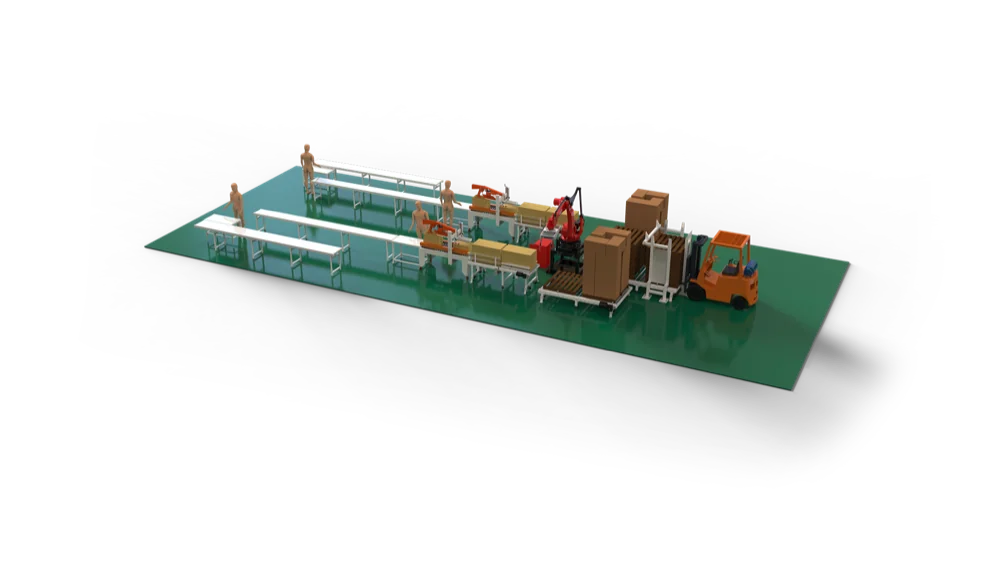
Palletizing is heavy, repetitive, and hard on people — which makes it one of the easiest wins for a robot. If your line ends with someone stacking boxes or bags onto a pallet all shift, a palletizing cell usually pays back fast.
Why palletizing fits a robot so well
- The motion is repeatable — same boxes, same pallet pattern
- The load is heavy — exactly the work you do not want a person doing all day
- Throughput is steady — a robot never slows down at the end of a shift
What decides the cell
A palletizing cell is sized by a few honest numbers:
| Factor | Why it matters |
|---|---|
| Box weight & size | Sets the robot payload and gripper type |
| Cases per minute | Decides whether one robot keeps up with the line |
| Pallet pattern | More layers and interlocks need smarter path planning |
| Infeed height | Affects reach and cell layout |
Grippers matter more than people expect
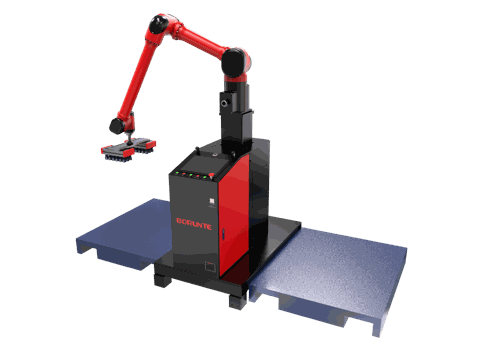
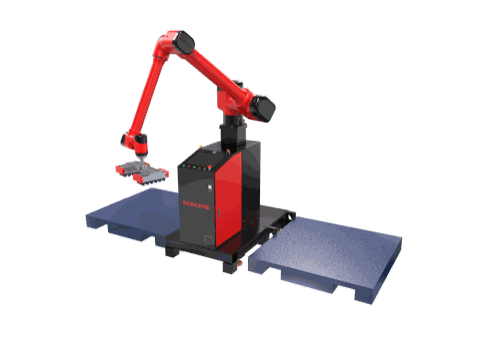
A vacuum head suits cartons; a clamp or fork suits bags and open trays. Picking the wrong gripper is the most common reason a palletizing cell underperforms — get this right and the rest is straightforward.
A palletizing robot does not just save labor. It removes the single most common source of back injuries on a packaging line.
If your line ends in manual stacking, tell us the box weight and rate and we will tell you honestly whether a cell fits.
FAQ
What box weight and rate suit a palletizing robot?
Box weight and size set the robot payload and gripper; cases per minute decide whether one robot keeps up with the line. Give us both and we can size it.
Which gripper is right for palletizing?
A vacuum head suits cartons; a clamp or fork suits bags and open trays. Choosing the wrong gripper is the most common reason a cell underperforms.
Does a palletizing robot only save labor?
No. It also removes the most common source of back injuries on a packaging line and keeps throughput steady at the end of every shift.