Robot CNC Machine Tending for High-Mix Low-Volume Shops: 4-Axis vs 6-Axis, One-to-One vs One-to-Three


Why high-mix low-volume shops are the hardest case for CNC tending automation
Most robot tending content is written for high-volume production: one part, one fixture, one cycle, thousands of repetitions. That is not the world most job shops live in.
In a high-mix low-volume shop, the machine doesn't stop changing. A batch of 40 parts runs on the lathe in the morning; by afternoon the same machine is running a different family with a different blank size, a different chuck jaw set, and a different cycle time. Any automation that only works when nothing changes is not automation — it's a dedicated cell that becomes obsolete the moment the schedule shifts.
So the real question isn't "can a robot tend a CNC?" It can. The question is: can a robot tend a CNC in a shop where the part changes every few hours, and where the operator is also the setup person, the inspector, and the person who answers the phone?
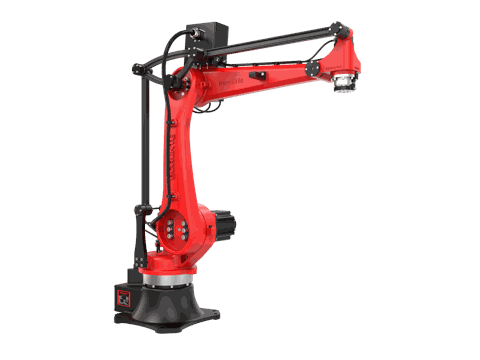
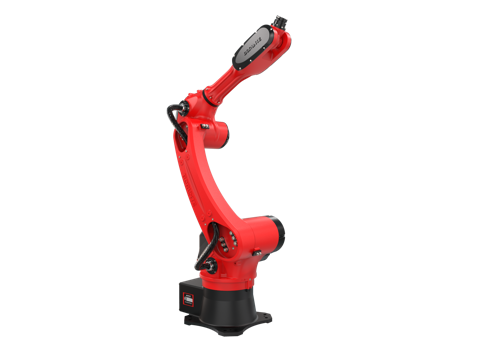
This guide answers that question in FAQ form, and then compares the two configurations most shops end up choosing between: a 4-axis robot like the BRTIRPZ1508A and a 6-axis robot like the BRTIRUS1510A.
The two decisions that actually matter
Before payload, reach, or brand, high-mix shops face two structural decisions:
- One robot to one machine, or one robot to several machines?
- 4-axis or 6-axis?
Everything else — gripper design, bar feeder interface, safety fencing, controller — follows from those two.
One-to-one vs one-to-three
A one-to-one cell is the simplest and the fastest to commission. The robot sits at the machine door, loads and unloads, and the machine runs unattended for the duration of the cycle. It is the right choice when a single machine is the bottleneck and the part family is stable enough to justify a dedicated gripper.
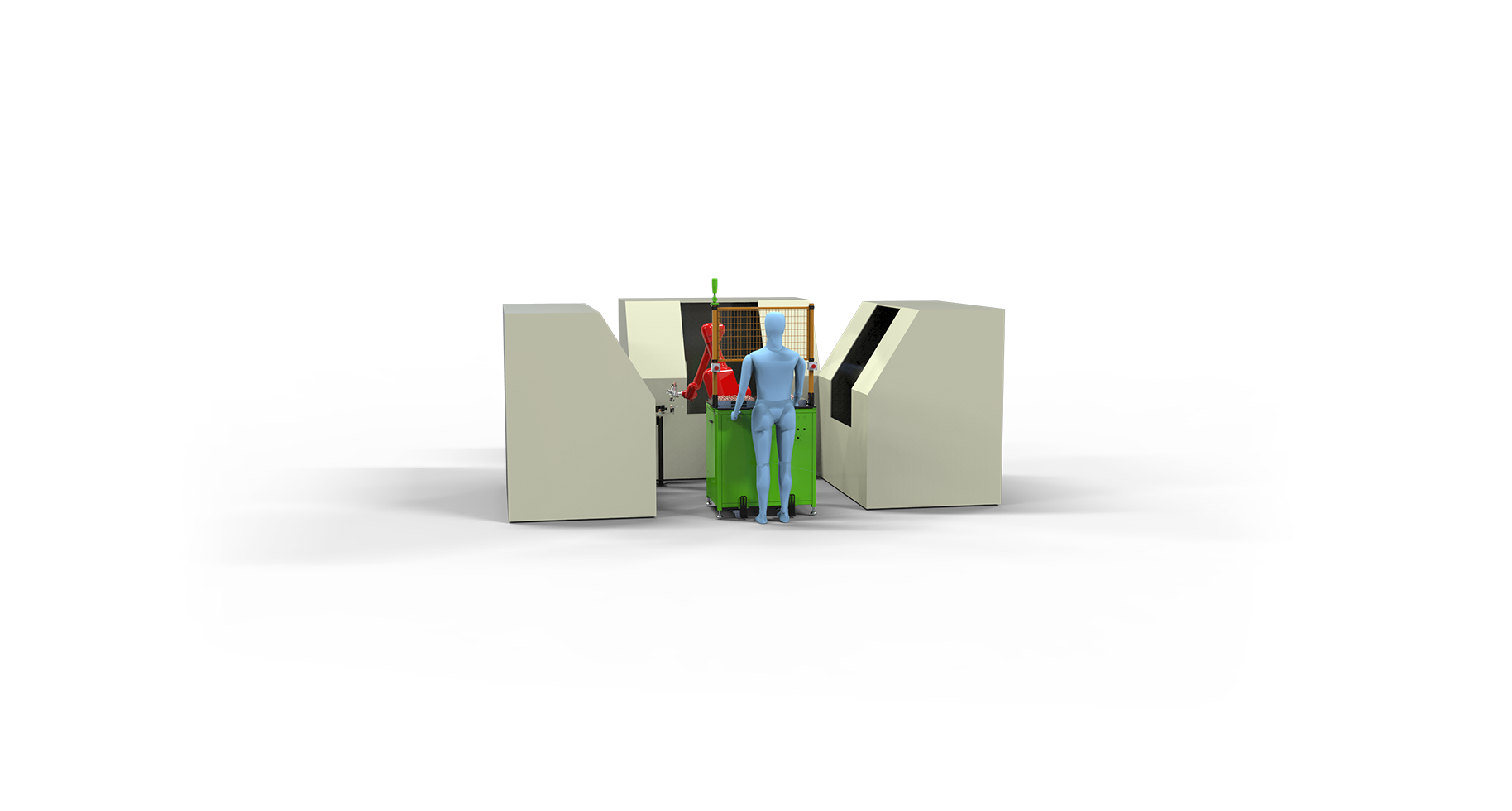
A one-to-three layout — one robot serving three CNC machines — is what most high-mix shops actually want, because it matches how the shop already works: one operator walking between three machines. The robot replaces the walking, not the machines. The trade-off is scheduling logic. The robot can only be at one machine at a time, so the cell controller has to decide which machine gets served next based on cycle time, part priority, and whether a machine is waiting on a load or a completed part.
That scheduling problem is where most one-to-three projects succeed or fail. The robot itself is rarely the limiting factor.
4-axis vs 6-axis
A 4-axis robot handles the vast majority of CNC tending tasks: pick a cylindrical or prismatic blank from a feeder or tray, rotate it, insert it into a chuck or fixture, wait, remove the finished part, place it. The motion is essentially planar plus rotation. Fewer axes means simpler kinematics, simpler programming, and a smaller footprint for the same reach.
A 6-axis robot becomes necessary when the task requires orienting the part in more than one plane — for example, presenting a part at an angle into a fixture, reaching over an obstruction, or handling a part where the gripper must approach from a direction the 4-axis wrist cannot produce. In high-mix shops, 6-axis flexibility often pays for itself not because any single part needs it, but because the next part might.
Comparison: BRTIRPZ1508A (4-axis) vs BRTIRUS1510A (6-axis)
Both models are part of the BORUNTE robot range that YGT Robot integrates for CNC tending applications. The table below reflects published selection-manual specifications.
| Specification | BRTIRPZ1508A | BRTIRUS1510A |
|---|---|---|
| Axis configuration | 4-axis | 6-axis |
| Payload | 8 kg | 10 kg |
| Arm reach | 1413 mm | 1587 mm |
| Repeatability | ±0.05 mm | ±0.05 mm |
| Robot weight | approx. 150 kg | 152 kg |
| Power capacity | 3.18 kVA | 5.06 kVA |
| CE conformity | Yes (DPWD/03/0646/2025, 2006/42/EC + 2014/35/EU, ICG) | Yes (DPWD/03/0646/2025, 2006/42/EC + 2014/35/EU, ICG) |
| Explosion-proof variant | Not available | Not available |
How to read this table. The two robots share the same repeatability class, so precision is not the deciding factor between them. The differences that matter are payload (8 vs 10 kg), reach (1413 vs 1587 mm), and axis count. Reach matters more than payload in most one-to-three layouts, because the robot has to cover the door of three machines plus the travel between them. Axis count matters when part orientation is complex or when the cell must handle a broad, unpredictable mix.
Bar stock feeding: the part of the cell people underestimate
When the blank comes from a bar feeder rather than a tray, the robot's job changes. It is no longer picking a discrete part from a known position — it is interacting with a bar that may be long, may be supported at one end, and may need to be pulled, positioned, or handed off to a chuck.
In practice, bar stock feeding in a high-mix shop raises three questions:
- Bar length and diameter range. A gripper that handles one bar size will not handle the next job's bar size. Quick-change gripper jaws, or a gripper with a wider adjustment range, reduce changeover time.
- Bar support during transfer. A long bar that is only gripped at one end can sag or whip. The cell design has to account for how the bar is supported between the feeder and the chuck.
- Interface with the bar feeder. The robot and the bar feeder have to agree on when a bar is ready, when it has been consumed, and when the next bar should be loaded. This is a controls and sequencing problem, not a robot problem.
For shops that run both bar-fed and chuck-fed work, the practical answer is usually a gripper strategy that covers both, rather than two separate cells.
What a one-to-three CNC tending cell actually looks like
A one-to-three layout typically includes:
- One robot mounted on a base or linear track, positioned to reach all three machine doors
- A gripper sized to the part family (or a quick-change system for multiple families)
- A part presentation system — tray, magazine, or bar feeder — depending on the blank
- A finished-part placement area (bin, conveyor, or pallet)
- A cell controller that sequences which machine is served next
- Safety fencing and interlocks that allow the operator to enter the cell safely during a batch change
The robot is one component. The cell is the product.
What to consider before choosing a configuration
When evaluating a robot CNC tending cell for a high-mix low-volume shop, these factors tend to decide the outcome more than the robot model itself:
- Part family range. How many distinct part geometries, sizes, and weights will the cell see in a typical month? A cell designed for one family will struggle with ten.
- Changeover time. How long does it take to switch the cell from one part to the next? If changeover takes longer than the batch, the cell loses money.
- Blank source. Bar feeder, tray, or magazine — each has different interface and sequencing requirements.
- Machine door and chuck interface. How does the robot open the door, confirm the chuck is open, and confirm the part is seated? These signals have to be wired and sequenced.
- Chip and coolant environment. The robot and gripper have to survive the machine's working environment.
- Operator access. The cell has to be safe to enter during a batch change, and the operator has to be able to override or pause it easily.
- Controls compatibility. The cell controller has to talk to the CNC, the bar feeder, and the robot. This is where integration experience matters most.
How YGT Robot approaches CNC tending integration
YGT Robot (Guangdong Yigaite Intelligent Technology Co., Ltd.) integrates BORUNTE industrial robots into CNC tending, handling, palletizing, welding, and spraying applications. In CNC tending projects, the work is not just mounting a robot at a machine door — it is designing the cell around the shop's actual part mix, changeover pattern, and machine layout.
A representative example is a one-to-three CNC tending project using the BRTIRUS1510A six-axis robot, where a single robot serves three CNC machines. The project illustrates the scheduling and reach considerations described above: the 6-axis configuration and 1587 mm reach allow the robot to cover three machine doors and handle part orientation across a mixed part family.
For shops evaluating a 4-axis configuration, the BRTIRPZ1508A offers 8 kg payload, 1413 mm reach, and ±0.05 mm repeatability in a smaller, lower-power footprint — a good fit when the part family is stable and the cell is one-to-one or one-to-two.
FAQ
Q: Can one robot really serve three CNC machines in a high-mix shop?
A: Yes, but the constraint is scheduling, not the robot. The robot can only be at one machine at a time, so the cell controller has to sequence service based on cycle times and part priority. If one machine has a much longer cycle than the other two, one-to-three works well. If all three machines have short, similar cycles, the robot may become the bottleneck.
Q: When should I choose a 4-axis robot instead of a 6-axis robot for CNC tending?
A: Choose 4-axis when the part can be picked, rotated, inserted, and removed with planar motion plus rotation — which covers most cylindrical and simple prismatic parts. Choose 6-axis when the part must be oriented in more than one plane, when the gripper needs to approach from an angle the 4-axis wrist cannot reach, or when the shop's part mix is broad enough that flexibility is worth the extra cost and programming complexity.
Q: What payload do I need for CNC tending?
A: Payload must cover the part, the gripper, and any fixturing the gripper carries. For most high-mix shops running parts under 5 kg, an 8 kg or 10 kg robot leaves adequate margin. Heavier parts, or parts held at a long moment arm, require a larger robot.
Q: How does bar stock feeding change the cell design?
A: Bar feeding introduces a long, sometimes flexible workpiece and a separate machine (the bar feeder) that the cell must coordinate with. The gripper needs to handle the bar diameter range, the bar needs support during transfer, and the cell controller needs signals from the bar feeder to know when a bar is ready or consumed.
Q: What repeatability do I need for CNC tending?
A: Both the BRTIRPZ1508A and BRTIRUS1510A offer ±0.05 mm repeatability, which is sufficient for the vast majority of CNC tending tasks. The limiting factor in most cells is the gripper and the part presentation, not the robot's repeatability.
Q: Can the robot handle deburring or other secondary operations in the same cell?
A: Secondary operations such as deburring, polishing, gluing, or vision sorting require application-specific confirmation. YGT Robot's confirmed application scope covers handling, loading/unloading, palletizing, welding, and spraying. For secondary operations, the specific process and tooling need to be reviewed with our engineers before committing to a cell design.
Q: Do these robots have CE certification?
A: Yes. Both the BRTIRPZ1508A and BRTIRUS1510A carry CE conformity (DPWD/03/0646/2025, covering 2006/42/EC machinery and 2014/35/EU low voltage, verified by ICG). Neither model has an explosion-proof variant; the BORUNTE range includes one explosion-proof model, the BRTIRSE2013F.
Q: What is the biggest mistake shops make when automating CNC tending?
A: Designing the cell around the current job instead of the shop's part mix. A cell that only handles today's part will be bypassed the moment the schedule changes. The cell should be designed around the range of parts the shop actually runs, with changeover time treated as a first-class design requirement.
Related products
- BRTIRPZ1508A 4-axis robot — 8 kg payload, 1413 mm reach, ±0.05 mm repeatability
- BRTIRUS1510A 6-axis robot — 10 kg payload, 1587 mm reach, ±0.05 mm repeatability
Next step
If you are evaluating robot CNC tending for a high-mix low-volume shop, the most useful first conversation is not about which robot to buy — it is about your part mix, your machine layout, and your changeover pattern. Those three things determine whether a one-to-one or one-to-three cell makes sense, and whether a 4-axis or 6-axis robot is the right fit.
Share your part family and machine layout with our engineering team, and we can help you work through the cell configuration before any equipment decision is made.