Robot Workcells for High-Mix, Low-Volume Machining: A Sourcing FAQ

Why high-mix shops hesitate — and why that hesitation is reasonable
If you run a job shop, most automation advice you read was written for someone else. It assumes long runs, stable part families, and a single product line that justifies a dedicated line. Your reality is the opposite: dozens of part numbers, batch sizes in the tens or low hundreds, fixtures that change weekly, and a skilled machinist who is already the bottleneck on setup as much as on cycle time.
That does not mean automation is off the table. It means the justification has to be built differently. The question is not "should we automate?" but "which slice of our work is repetitive enough, stable enough, and painful enough to hand to a machine — and what is the smallest investment that proves it?"
This FAQ walks through the four decisions most shop owners and manufacturing engineers actually face: whether automation fits your part mix, which parts and volumes pay off, how to phase the spend, and whether your first purchase should be a stand-alone robot or an integrated workcell.
The problem, stated plainly
A high-mix shop typically loses time in three places that have nothing to do with cutting metal:
- Machine idle time between parts. The operator is deburring, measuring, or setting up the next job while the spindle sits still.
- Load/unload as a manual, repeatable task. Picking a blank, orienting it, clamping, unclamping, and stacking the finished part is low-skill, high-repetition work — exactly the kind of task that competes with the operator's attention.
- Second-shift and night-shift coverage. The work does not stop being needed when the day shift ends, but staffing it is expensive and hard to sustain.
None of these are solved by buying a robot. They are solved by redesigning the load/unload loop so the machine keeps cutting while something else handles the part handling.
What automation actually buys you
The value of a workcell is not "a robot." It is a set of production properties that a manual loop struggles to deliver consistently:
| Property | What it means in a job shop |
|---|---|
| Repeatable cycle | The same load position, the same clamp sequence, the same unload path — every cycle |
| Stable quality | Less variation from operator fatigue, shift changes, or rushed setups |
| Recovered spindle hours | The machine runs during tasks that previously stopped it |
| Flexibility within a family | A cell can be re-taught for a new part in the same family without a rebuild |
| Long-run cost structure | Labor is redeployed to setup, inspection, and higher-value work |
Notice what is not on that list: a specific percentage improvement. Any credible number depends on your part, your machine, your fixture, and your shift pattern. Treat vendor-supplied percentages with the same skepticism you would apply to a cycle-time claim without a test cut.
When a workcell makes sense for a high-mix shop
A useful screen is to look at the shape of your work, not the total volume. A cell tends to justify itself when several of these are true:
- You have a repeatable part family. Even 15–30 part numbers that share a similar blank size, clamping method, and tolerance band can be a viable family. A shop with 400 unrelated one-off parts is a different problem.
- Batch sizes are large enough to amortize setup. The break-even batch size depends on your setup time and cell re-teach time — but if you are changing over every 20 parts, the cell will spend too much time being re-taught.
- The machine is the constraint. If the CNC is idle waiting for an operator, a cell recovers spindle time. If the CNC is already fully loaded and the bottleneck is elsewhere, a robot will not help.
- The load/unload task is genuinely repetitive. Picking, orienting, clamping, and stacking the same geometry is a good candidate. Deburring, inspection, and fixturing are harder to automate and often not worth it in the first cell.
- You can staff the cell, not just buy it. Someone has to own programming, gripper changes, and troubleshooting. A cell without an owner becomes a monument.
If three or more of those hold, a phased cell is worth a serious feasibility study. If one or none hold, the honest answer may be to wait, or to start with a narrower task.
Which parts and volumes make automation pay off
This is where most sourcing conversations go wrong: the buyer asks "what robot should I buy?" before answering "which parts am I automating?" A better sequence is to rank your parts by automation friendliness and pain, then pick the overlap.
A practical ranking looks at:
- Geometry stability. Parts that can be picked and oriented repeatably (round blanks, symmetric housings, flat plates with a locating feature) are easier than parts that need complex fixturing.
- Weight and size. This drives payload and reach requirements more than any other single factor.
- Tolerance sensitivity. Tight tolerances are fine — but the cell's repeatability and the fixture's locating method have to match them.
- Cycle time and batch size. The longer the cycle and the larger the batch, the more spindle time a cell recovers.
- Changeover frequency. Parts that share a gripper and a fixture family are cheaper to add than parts that need new tooling every time.
As a rule of thumb, a first cell is usually best aimed at a narrow, high-pain part family — not your entire catalog. Prove the loop on the parts that hurt most, then expand.
Phasing the investment
A first workcell does not have to be a full turnkey line. A phased approach de-risks the decision and keeps capital aligned with evidence:
| Phase | Scope | What it proves |
|---|---|---|
| 1. Feasibility | Part audit, cycle-time study, gripper and fixture concept | Whether the part family is automatable at all |
| 2. Pilot cell | One robot, one machine, one part family, manual changeover | Whether the loop runs reliably in your shop |
| 3. Integration | PLC/handshake with the CNC, safety, part-present sensing | Whether the cell runs unattended or lightly attended |
| 4. Expansion | Second machine or second part family on the same platform | Whether the platform scales without a rebuild |
Most shops should not skip Phase 1. A feasibility study that costs a fraction of the cell will tell you whether Phase 2 is worth funding — and it will surface the fixture and gripper issues that decide the project's success.
Stand-alone robot vs. integrated workcell
This is the decision that most affects your first purchase, and it is often framed as a price question when it is really a scope question.
| Consideration | Stand-alone robot | Integrated workcell |
|---|---|---|
| What you buy | Robot arm and controller | Robot + gripper + fixture + machine interface + safety + integration |
| Who integrates | You or a third party | The integrator, as a delivered system |
| Time to first part | Longer if you build the interface yourself | Shorter, because the loop is designed as a whole |
| Flexibility | High, but you own the integration risk | High within the designed part family |
| Best for | Shops with in-house automation engineers and a clear interface plan | Shops that want a working loop, not a component |
| Hidden cost | Fixture, gripper, safety, PLC handshake, commissioning | Mostly upfront and visible |
A useful way to think about it: a stand-alone robot is a component; an integrated workcell is a production capability. If your team has the controls and mechanical engineering to design the gripper, fixture, and machine handshake — and the time to debug them — a stand-alone robot can be the lower-cost path. If your team's strength is machining, not integration, an integrated cell usually reaches first-part faster and with fewer surprises.
Key selection factors
When you do specify a robot, these are the factors that actually drive the choice:
- Payload. Part weight plus gripper weight, with margin for acceleration. A 10 kg-class robot and a 20 kg-class robot cover very different part families.
- Working range / arm reach. Must cover the machine door, the pick station, and the unload station without awkward extensions.
- Repeatability. Tight tolerances need a robot whose repeatability and fixture locating method match the part.
- Controller compatibility. The robot has to handshake with your CNC and PLC — confirm the interface before you buy.
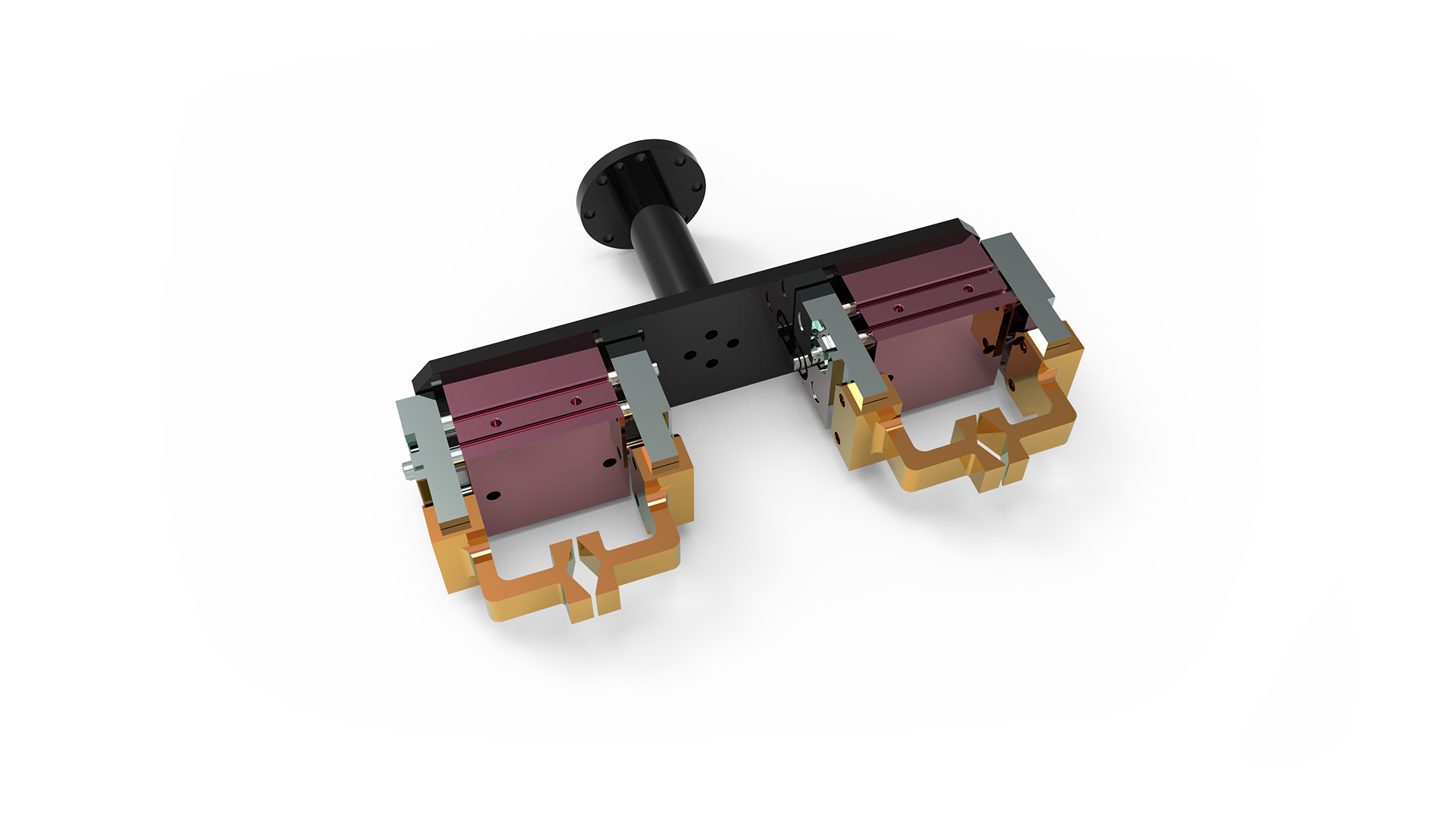
- Gripper strategy. Vacuum, pneumatic, or dual-gripper end effectors solve different part families; the gripper is often the real engineering.
- Safety and certification. Confirm the machine-safety and low-voltage compliance relevant to your market.
- After-sales and spares. A cell that cannot be serviced locally is a liability.
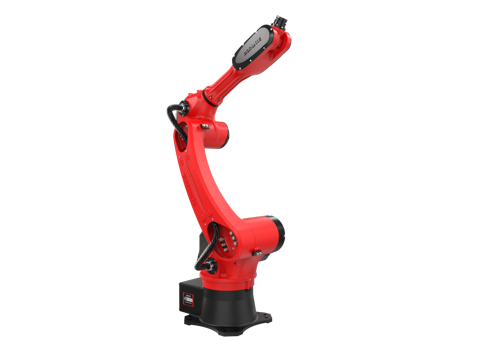
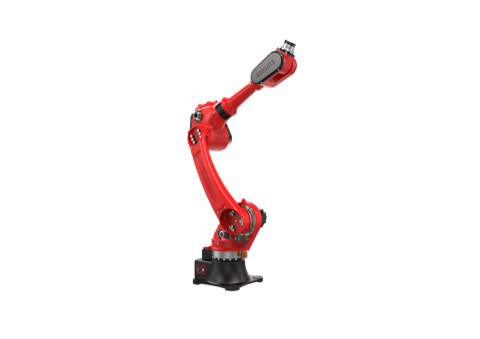
For reference, two six-axis models commonly used in machine-tending work are the BRTIRUS1510A (10 kg payload, 1587 mm reach, ±0.05 mm repeatability) and the BRTIRUS1820A (20 kg payload, 1895 mm reach, ±0.05 mm repeatability). Both carry CE conformity verification under the 2006/42/EC machinery and 2014/35/EU low-voltage directives. Neither is explosion-proof — if your process requires that, it is a different specification entirely.
Where YGT fits
YGT Robot (Guangdong Yigaite Intelligent Technology Co., Ltd.) works as an integration and application partner, not a robot manufacturer. The robots are sourced from BORUNTE; the integration — gripper design, fixture concept, machine handshake, safety, and commissioning — is where YGT's engineering sits.
A representative example is a CNC one-machine, one-robot tending project built around the BRTIRUS1510A with a dual-gripper end effector. That project is the kind of loop this article describes: a narrow part family, a single machine, a designed load/unload path, and a phased path to unattended running.
YGT's declared application scope covers handling, loading/unloading, palletizing, spraying, and welding. Processes outside that scope — deburring, grinding, polishing, gluing, vision sorting, laser cutting, assembly — are not confirmed capabilities and should be discussed with an engineer before they are assumed.
FAQ
Q: My batches are only 50–100 parts. Is a robot workcell still worth it? A: It can be, if the part family is stable and the setup/re-teach time is short. The break-even depends on your cycle time, changeover time, and how much spindle idle time the cell recovers. A feasibility study on your actual parts is the only reliable way to answer it.
Q: Do I need a fully integrated workcell for my first project? A: Not necessarily. If you have in-house controls and mechanical engineering, a stand-alone robot plus your own integration can work. If your team's strength is machining, an integrated cell usually reaches first-part faster.
Q: Can a robot handle deburring and inspection too? A: Deburring, grinding, polishing, vision sorting, and assembly are outside YGT's confirmed application scope. They may be technically possible, but they should be confirmed with an engineer rather than assumed.
Q: What payload do I need? A: Part weight plus gripper weight, with margin for acceleration. A 10 kg-class robot suits lighter parts; a 20 kg-class robot covers heavier blanks and grippers. The gripper is often the deciding factor.
Q: How do I know the robot will talk to my CNC? A: Confirm the interface — digital I/O, fieldbus, or PLC handshake — before purchase. The controller compatibility check is part of the feasibility phase, not an afterthought.
Q: Is a used or stand-alone robot cheaper? A: It can be, but the integration cost (fixture, gripper, safety, PLC handshake, commissioning) is where budgets usually slip. Compare total delivered cost, not component price.
Related products
- BRTIRUS1510A six-axis robot
- BRTIRUS1820A six-axis robot
Next step
If you are weighing a first workcell, the most useful next step is not a quote — it is a part audit. Send us a short list of the part families you are considering, their weights and batch sizes, and the machine you would tend. We will tell you which parts look automatable, which need more fixturing work, and what a phased path would look like for your shop.